


EMS (electrical muscle stimulation)
Complete support,
from preparation to recovery
What is EMS?
EMS (electrical muscle stimulation)
EMS reproduces the electrical signal your brain naturally sends to make a muscle contract. The device delivers these same impulses through electrodes placed on the skin, using programs designed for a specific goal: preparing the muscle before exercise, speeding up its recovery afterwards, or strengthening it over time. Unlike TENS, which acts on the perception of pain, EMS works directly on the muscle fibre. It is a method used both by elite athletes and in rehabilitation, as a complement to physical activity, not a replacement for it.
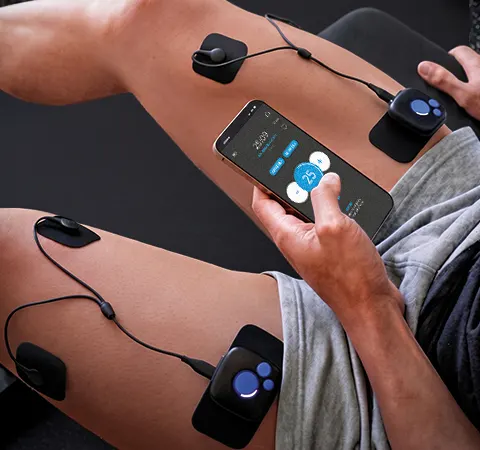
Electrodes placed on the skin send gentle electrical impulses.
1
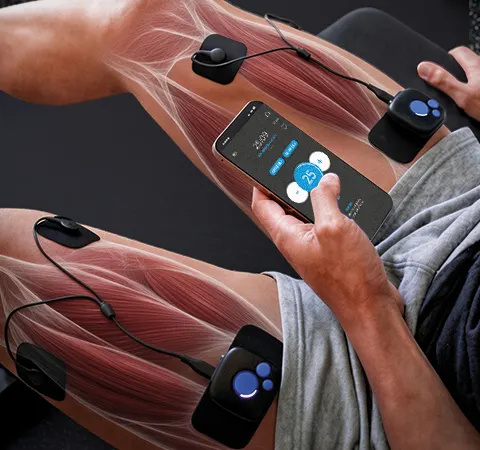
These impulses stimulate the motor nerves and make the muscle contract, like a light workout.
2
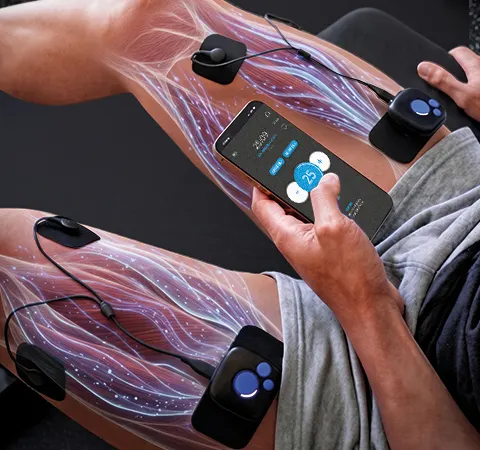
These rhythmic contractions boost blood circulation, help clear metabolic waste (e.g. lactic acid) and reduce muscle tension.
3
Recovery: before and after exercise
After exercise, muscles need to recover. Electrostimulation improves blood flow, promotes muscle oxygenation and speeds up the removal of metabolic waste, more effectively than purely passive rest, which lets waste products build up. Used right after training, it helps you string sessions together without accumulating muscle fatigue. Before exercise, it also supports physical preparation: it stimulates capillarisation (the development of the small blood vessels that supply the muscle) to bring it more quickly to an optimal state before training.
Muscle strengthening
Add electrostimulation to your sports routine: muscle definition, endurance and resistance work, improved strength and explosiveness, sharpening and toning. Combined with your physical activity, it helps you build muscle more efficiently without putting strain on your joints. The Duo Sport offers dedicated programs for endurance, explosiveness, resistance, core strengthening and more.
Late 1960s
In the USSR, the first research on electrical muscle stimulation was carried out on elite athletes preparing for the Olympics.
1970s
EMS begins to be used in physiotherapy for muscle strengthening and rehabilitation.
Today
Widely adopted by elite athletes and physiotherapists alike, as a complement to conventional training.
Principle
Reproduces the electrical signal the brain naturally sends to make a muscle contract.
Performance booster
Duo Sport 2
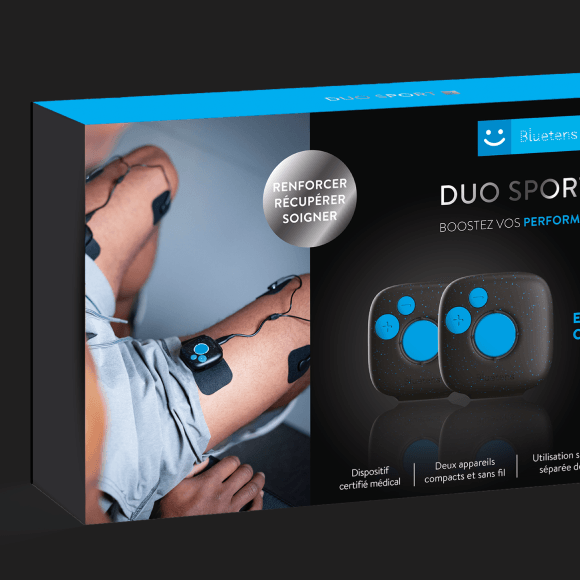
The Duo Sport 2 is designed for demanding athletes who want to improve their physical preparation, boost muscle recovery and effectively relieve pain.
Ergonomic, lightweight and discreet design
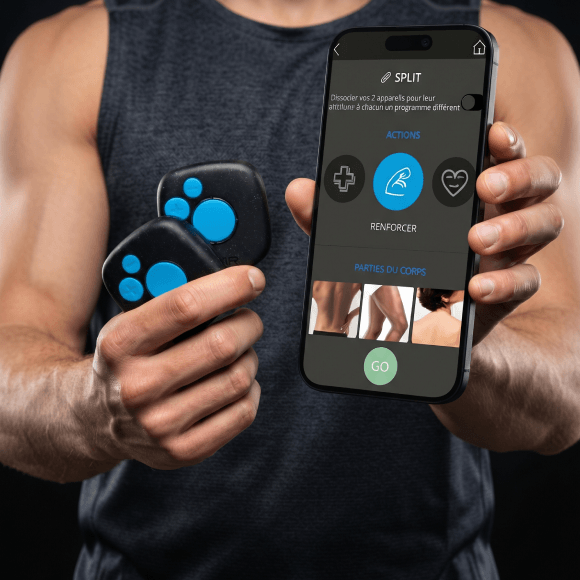
2 devices connected to a comprehensive app
17 body areas
100 programs
Magnetic electrode connection
€299
or €99.66/month in 3 instalments
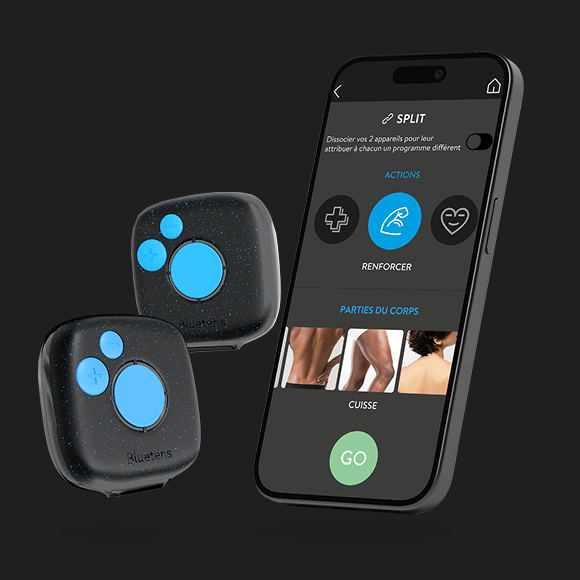
How does it work?
Choose an action
Treat, relax or strengthen: select it in the app, along with the body area to treat.
Place the electrodes
Position the electrodes by following the placement shown on photos of a male or female body.
Start the program
Off you go: the session starts. Adjust the intensity on the device or in the app.
Bluetens, partner in recovery and care




Delighted users
Duo Sport 2
Whether you're an amateur or a professional, the Duo Sport 2 meets all your sporting needs and more.
Take your training to the next level!
€199
or €99.66/month in 3 instalments
Major contraindications
Please note: electrostimulation is not recommended for people with a pacemaker, for pregnant women, or in case of epilepsy. If in doubt, ask a healthcare professional for advice.
Frequently asked questions
Electrostimulation is not recommended during pregnancy, if you have a pacemaker or another implanted device (metal prostheses), epilepsy, serious heart conditions, phlebitis or blood circulation disorders. It must not be used on damaged skin, on a tumour area, or directly near the heart. See the full list in the user manual. If in doubt, ask your doctor or physiotherapist for advice.
After exercise, muscles build up tension and metabolic waste from repeated contractions. EMS stimulates local blood circulation, which helps clear it and limits muscle soreness. It also helps relax muscle fibres in depth, like a manual massage. The result: faster recovery, less muscle stiffness, and a body ready for the next session. A real advantage when you train several times a week.
Both, depending on your goal. Before exercise, EMS supports physical preparation: it activates the muscle and stimulates capillarisation, i.e. the development of the small blood vessels that supply the muscle, to bring it more quickly to an optimal state before training. After exercise, it switches to a recovery role: it promotes blood circulation to clear metabolic waste and release the tension built up during the session.
No, EMS is not meant to replace conventional training. It works the muscle passively, through electrical impulses, whereas a workout also engages the cardiovascular system, coordination and the whole body in motion. EMS is a complement: it strengthens, prepares or helps the muscle recover alongside physical activity, not instead of it. It is a tool to integrate into a sports routine, not a replacement.
EMS can contribute to muscle strengthening alongside training, by working the fibres more deeply than conventional exercise. But it does not replace the load and progression of a real workout: it is a tool for reinforcement and recovery, not a shortcut to building muscle without effort.