


Electrostimulation
A technology recognised in both medical and sports settings
What is electrostimulation?
Electrostimulation reproduces a natural process: the way your brain sends electrical signals to make your muscles contract. The device sends the same low-intensity electrical impulses, organised into specific programmes. Depending on the programme selected, it meets three needs: relieving pain, relaxing muscles or strengthening them.
This is not a recent trend: since the mid-20th century, electrostimulation has been the subject of numerous scientific studies in medicine, sport and wellness. Today, it is widely used in both fields.
TENS (transcutaneous electrical nerve stimulation)
It is used to relieve all types of pain (osteoarthritis, tendinitis, sciatica, etc.). Simply place the electrodes around the painful area and start the appropriate programme: electrical impulses block pain signals from reaching your brain or trigger the release of endorphins, providing fast, long-lasting relief. It is a drug-free, non-invasive solution widely used in medical and allied healthcare settings (physiotherapy, pain clinics and specialist physicians). Bluetens offers two targeted modes, Gate Control and Burst, which produce different sensations depending on your needs.
Muscle care
EMS stands for electrical muscle stimulation. Unlike TENS, which targets pain, it provides a deep muscle massage. It stimulates blood circulation and helps eliminate accumulated toxins, immediately relieving muscle tension. After exercise, it speeds up recovery and helps prevent muscle soreness.
Strengthening
Combined with physical activity, electrostimulation (active and passive stimulation) strengthens your muscles and develops strength and endurance without putting strain on your joints. This method has been used by elite athletes for years.
A method studied for over 50 years
1965
The Gate Control theory, published in the scientific journal Science by Melzack and Wall, laid the foundations for the pain-relieving mechanism of TENS.
Recognised by the French National Authority for Health (HAS)
The French National Authority for Health assesses transcutaneous nerve stimulation as an alternative or complement to medication for chronic pain.
Late 1960s
In the USSR, the first research into electrical muscle stimulation was carried out on elite athletes preparing for the Olympic Games.
First-line treatment
The French Society for the Study and Treatment of Pain (SFETD) recognises it as part of the management of localised peripheral neuropathic pain.
How does it work?
Choose an action
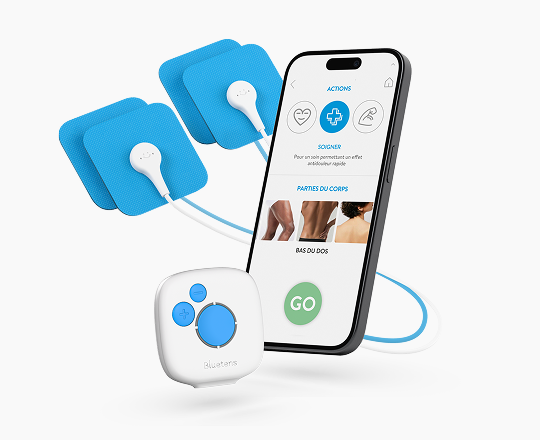
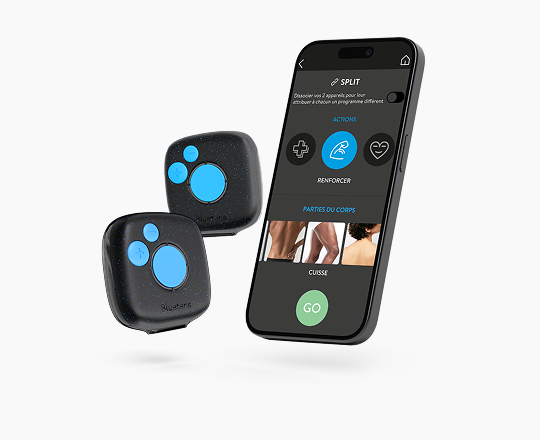
Choose between treat, relax or strengthen in the app, then select the body area to treat.
Place the electrodes
Position the electrodes by following the placement shown on photos of a male or female body.
Start the programme
Off you go: the session begins. You adjust the intensity on the device or in the app.
What each programme feels like
Depending on the programme selected, one or more of these movements are combined to meet your specific goal.
PRESSURE
Continuous, gradually increasing pressure, like a finger pressing without letting go.
TAPPING
Small, quick, rhythmic impacts, like gentle tapping on the skin.
KNEADING
A rolling movement that mimics kneading the muscle by hand.
CONTRACTION
A firm, sustained contraction, as though the muscle were tightening in on itself.
FRICTION
Fast, localised rubbing that stimulates circulation in the treated area.
French brand
since 2015
CE MDR-certified
medical device
Responsive
customer service
Satisfied users
Main contraindications
Please note: electrostimulation is not recommended for people with a pacemaker, pregnant women or people with epilepsy. If in doubt, consult a healthcare professional.
Frequently asked questions
Electrostimulation is not recommended during pregnancy or for people with a pacemaker or other implanted device (metal implants), epilepsy, serious heart conditions, phlebitis or blood circulation disorders. It must not be used on damaged skin, over a tumour or directly near the heart. Read the full list in the user manual. If in doubt, consult your doctor or physiotherapist.
No. Sensations range from mild tingling to a stronger muscle contraction, depending on the selected action and intensity. Users adjust the intensity themselves, so they always remain in control.
No, there is no tolerance in the sense that the body becomes so accustomed to it that the device stops working. However, it is normal to gradually increase the intensity over successive sessions as the body becomes more tolerant of the electrical sensation. This does not mean that its effect on the muscles or pain is reduced. You can also vary the programmes: the app offers around thirty for each action.
The Bluetens app guides you step by step. You will find advice on intensity and frequency of use on each programme’s description page.
Yes. It is neither a gimmick nor a recent trend: electrostimulation has been used for decades in professional sport (recovery and physical preparation) and in clinical settings (rehabilitation, physiotherapy and pain clinics). This long-standing use, supervised by healthcare and sports professionals, established its effectiveness well before it became available for home use.