


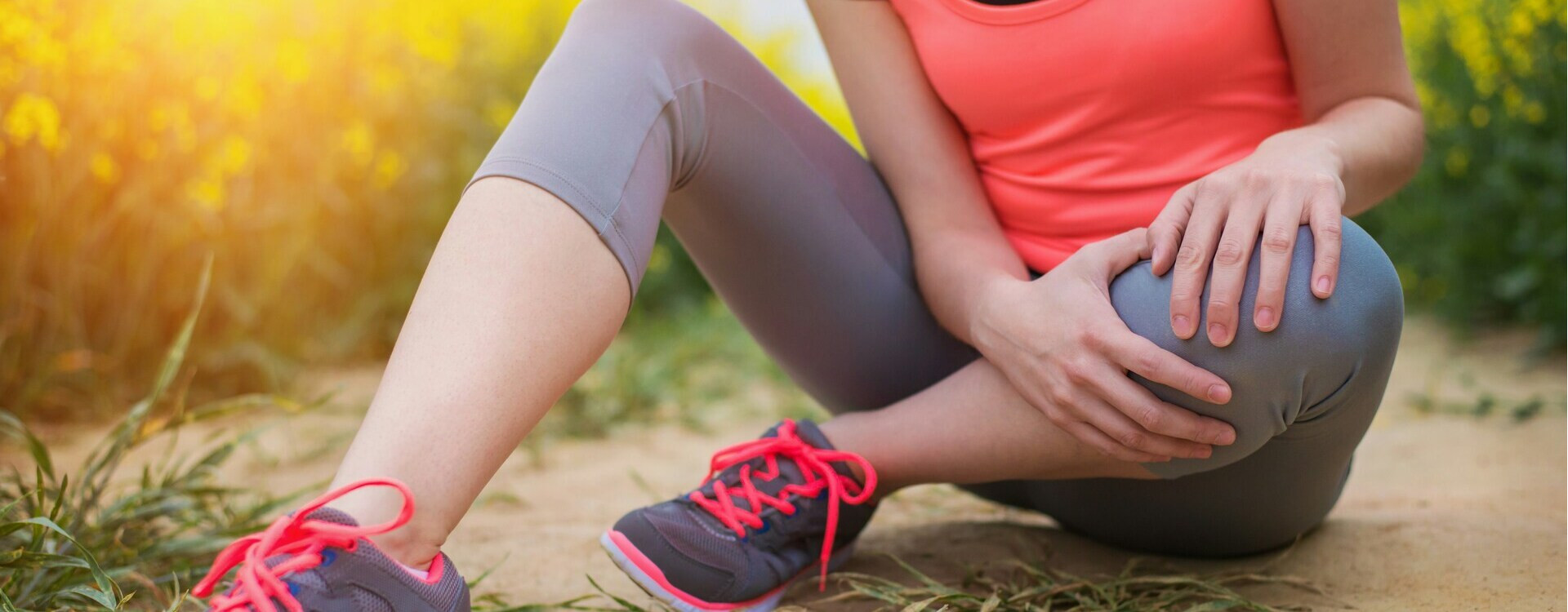
Hamstring injury: tightness, strain or tear?
Pain at the back of the thigh after a sprint, a quick start or the splits can correspond to several injuries. Muscle tightness (contracture) mainly causes persistent tension without any torn fibres. A strain involves micro-tears or a small muscle tear. A larger tear generally causes sudden pain, loss of strength and sometimes bruising. Only a clinical examination can identify the injury precisely.
Quick answer
Tightness, strain or tear: how to tell them apart?
Muscle tightness mainly causes diffuse tension. A strain often occurs during a quick movement and makes running painful. A larger tear generally causes sudden pain, loss of strength and sometimes bruising.
Where are the hamstrings?
The hamstrings are three muscles at the back of the thigh: the biceps femoris, the semitendinosus and the semimembranosus. They help bend the knee, extend the hip and control the leg during running.
These muscles work hard during accelerations, jumps and changes of direction. A previous injury, a rapid increase in intensity or too short a warm-up can increase the risk.
Tightness, strain or tear: how can you differentiate them?
The terms used sometimes vary between athletes and healthcare professionals. The following table gives guidelines without replacing a diagnosis.
| Type of injury | Common sensation | Muscle function | Visible signs |
|---|---|---|---|
| Muscle tightness | Stiffness, hard muscle, diffuse pain that builds during or after exercise | Walking often possible, strength largely preserved | Usually no bruising |
| Strain | Pulling sensation or sharp pain during a quick movement | Running difficult, pain on stretching or contracting | Possible slight swelling |
| Tear | Sudden pain, sometimes described as a blow or a snap | Limping, loss of strength, difficulty continuing exercise | Possible swelling or bruising in the following hours or days |
| Complete rupture | Very severe pain with significant loss of function | Weight-bearing and knee bending very difficult | Extensive bruising or possible deformity |
Hamstring pain that develops gradually may also come from tendon overload, especially near the buttock. Pain radiating down from the back with tingling suggests a nerve origin.
Which symptoms point to a hamstring injury?
Pain at the back of the thigh often occurs during an acceleration or a movement that rapidly lengthens the muscle. It can be reproduced when bending the knee against resistance or when stretching the leg. A mild injury sometimes still allows almost normal walking, which can give a false impression of healing in the first few days.
A larger hamstring tear often causes clear weakness. Climbing stairs or lengthening your stride becomes difficult. Bruising increases the suspicion of torn fibres, but its absence does not rule out an injury.
What should you do right after the pain?
Stop the activity as soon as sudden pain occurs. Continuing to run can extend the injured area. During the first few hours, protect the thigh and limit painful movements. Light compression and cold wrapped in a cloth can reduce discomfort. Cold must never be placed directly on the skin.
Avoid forceful stretching, deep massage and strength exercises during the acute phase. Ask for advice before taking a painkiller or an anti-inflammatory.
Seek prompt medical advice in case of a snap, marked limping, significant weakness, extensive bruising or inability to bear weight. Persistent or recurring pain also warrants an assessment. An ultrasound or MRI is not systematic, but can help when the examination suggests a severe injury or one close to the tendon.
How does recovery work?
Recovery follows a progression guided by symptoms and strength. It first aims for comfortable walking, then introduces suitable contractions and eccentric work, where the muscle resists while lengthening.
Slow jogging resumes when brisk walking, stairs and basic exercises are well tolerated. Accelerations, sprints and changes of direction come back afterwards.
The timeline varies depending on the severity and location of the injury. A return based solely on the number of days that have passed increases the risk of recurrence. Leg strength, range of motion, tolerance to speed and the muscle’s response within 24 hours of exercise are better guidelines.
To learn more about muscle stiffness without sudden trauma, see our guide to hamstring tightness. Our article on the differences between muscle tightness and strain completes these guidelines.
To prepare your return without skipping steps, also see the guide to electrostimulation after a muscle tear.
During supervised recovery
Gradually getting back to muscle work?
Duo Sport 2 combines guided TENS and EMS programmes to support pain management, relaxation and progressive strengthening. It is used as a complement to exercises and the advice of the professional overseeing your recovery.
Key point: Electrostimulation does not determine the severity of an injury and does not reattach muscle fibres. A suspected major tear first requires medical advice.
Discover Duo Sport 2What role can electrostimulation play?
Electrostimulation cannot determine the severity of an injury and does not reattach muscle fibres. TENS can be considered to modulate pain as part of a programme approved by a professional. EMS can support progressive strengthening at an appropriate stage of rehabilitation.
The timing, intensity and placement of the electrodes must respect the diagnosis and the device’s instructions for use. A suspected major tear requires medical advice before any stimulation of the area. Bluetens devices offer TENS and EMS programmes guided by the app. They are used as a complement to exercises and the advice of the professional overseeing your recovery.
How can you reduce the risk of recurrence?
A gradual warm-up and strengthening the hamstrings, glutes and core prepare the muscle for accelerations. Eccentric exercises are often included in prevention.
Watch for changes in load. Adding speed, hills and volume at the same time greatly increases the stress. Localised tension justifies lightening the session.
FAQ
Frequently asked questions
Can you walk with a hamstring strain?
Walking is sometimes possible with a mild injury. It should remain comfortable and not worsen any limp. Pain that increases with each step or marked weakness requires medical advice.
How long does a hamstring injury last?
The duration depends on the extent of the injury, how close it is to the tendon, previous injuries and the demands of the sport. A mild injury may improve within a few weeks. A major injury may require several months of rehabilitation.
Should you stretch a painful hamstring?
Intense stretching is not recommended right after acute pain. Gentle mobilisations can be introduced as the pain decreases, then progressed according to the advice of a physiotherapist or sports doctor.
When can you start sprinting again?
Sprinting comes back after slow running and progressive accelerations. The leg should have regained strength close to that of the other side, with no pain during exercise and no significant reaction the next day.
Medical sources
Related posts
-
 History of electrostimulationPosted in: News01/10/202038 LikedElectrotherapy or electrostimulation, muscle stimulation, TENS, EMS you know it in many forms, but where does it come...Read article
- Nutrition advice: the shape in your plate!Posted in: News04/05/202325 LikedHere are some nutrition tips to improve your lifestyle and your physical condition.Read article
- Bluetens x Running Care02/07/202152 LikedThis year, Bluetens has collaborated with running Care, on this occasion our physiotherapist and head of the medical...Read article
- Tout ce que vous devez savoir sur la récupération activePosted in: Active recovery01/06/202219 LikedIl existe plusieurs façons de récupérer après un effort sportif : faire des étirements, se reposer ou encore...Read article
- La récupération active : un atout indéniable pour la musculationPosted in: Active recovery03/06/202218 LikedLa récupération active est une pratique sportive qui consiste à réaliser une activité physique de faible intensité...Read article
Blog navigation