


All about intercostal contracture: symptoms, causes and treatments
A contracture is a muscle condition characterised by a lasting, involuntary contraction of the fibres of a muscle. This excessive muscle tension causes pain and can become particularly disabling.
Contractures are particularly common among athletes and usually affect the lower limbs (thighs, calves, etc.). However, other muscles can be affected, such as the intercostal muscles.
Find out everything you need to know about intercostal contracture, from the symptoms and the most common causes to some treatment methods.
Intercostal contracture or intercostal pain: what is the difference?
An intercostal contracture is one possible cause of intercostal pain, but not all pain between the ribs necessarily comes from a contracted muscle.
An intercostal contracture is an involuntary tension of the muscles between the ribs. It often appears after exertion, poor posture, an awkward movement or repeated coughing. The pain usually increases when breathing in deeply, coughing, sneezing, rotating the torso or pressing on the tender area.
Conversely, intercostal pain can also be linked to intercostal neuralgia, a cracked rib or a muscle tear, local inflammation, trauma or another chest-related cause.
Sudden, crushing or very intense pain accompanied by shortness of breath, sweating, nausea, dizziness or pain radiating to the arm, jaw or back requires prompt medical attention.
To better distinguish between the main muscle injuries, you can also read our guide on the difference between a contracture and a strain.
Intercostal contracture: symptoms, causes and prevention
An intercostal contracture is a muscle condition that affects the muscles located between the ribs: the intercostal muscles.
Symptoms of an intercostal contracture
The most commonly observed symptoms of an intercostal contracture include:
- Pain of varying intensity located in the ribs,
- Increased pain when breathing deeply, but also when coughing, sneezing or adopting a poor posture,
- A slight reduction in breathing capacity,
- Difficulty changing position because of the pain,
- Etc.
It is important to note that these symptoms are very similar to those of serious lung or heart problems, although increased pain on breathing in is fairly characteristic of an intercostal problem. If in doubt, it is important to see a healthcare professional quickly to identify the exact cause of the intercostal pain.
The most common causes of an intercostal contracture
The causes and risk factors of an intercostal contracture may include:
- Poor posture held for a long period,
- Physical activity that puts excessive strain on the intercostal muscles (sport, carrying heavy loads, etc.),
- Lack of hydration,
- High stress levels,
- A sedentary lifestyle,
- Trauma caused by an awkward movement or a fall (cracked rib, muscle tear, etc.),
- Coughing,
- Pregnancy,
- A costovertebral restriction (in osteopathic terms),
- Etc.
How to prevent an intercostal contracture?
Here are some good everyday habits to prevent an intercostal contracture:
- Warm up properly before any physical activity and stretch afterwards,
- Eat a healthy, balanced diet and drink enough water,
- Get enough sleep and avoid excessive stress,
- Do sport regularly,
- Avoid poor postures for long periods,
- Etc.
How long does an intercostal contracture last?
How long an intercostal contracture lasts depends on its intensity, its cause and how quickly it is treated.
A mild contracture may start to improve after a few days of rest. In many cases, the pain gradually decreases within 5 to 10 days when painful movements are limited and the muscles can recover.
A more severe contracture, particularly after heavy coughing, sporting exertion or prolonged poor posture, can remain bothersome for one to three weeks.
Recovery is generally sufficient when deep breathing, torso rotations and pressure on the area no longer trigger pain. If symptoms persist beyond two to three weeks, get worse or keep coming back, it is advisable to see a doctor to rule out intercostal neuralgia, a cracked rib or another cause.
How to relieve an intercostal contracture?
An intercostal contracture is a benign muscle condition that usually heals on its own after a few days of rest. However, it can cause sharp pain and become disabling for the patient.
Here are some effective, easy-to-apply methods for relieving pain and promoting recovery in the case of an intercostal contracture.
What should you do first to relieve an intercostal contracture?
Start by reducing the movements that trigger the pain, such as twisting the torso, carrying heavy loads, ab exercises and sudden sports movements.
However, there is no need to stay completely still. Gentle movement and calm breathing help prevent the rib cage from stiffening further.
- Use heat for a classic muscle contracture, to gradually relax the intercostal muscles,
- Choose cold in the first few hours if the pain follows a blow or a fall,
- Breathe in slowly through your nose, without forcing your ribs open, then breathe out gently through your mouth,
- Avoid returning to intense activity as long as deep breathing or torso movements remain painful.
If you are unsure which method to use, read our article on applying heat or cold to a contracture.
Rest
Rest is the best natural remedy for relieving the pain of an intercostal contracture, whatever its cause.
It is important to limit as much as possible any movements that may increase the pain or cause discomfort. Naturally, all physical exertion that puts heavy strain on the intercostal muscles should be avoided.
Stretching exercises
Gentle stretching exercises are recommended to optimise the recovery of the affected muscles and limit pain. However, it is important to wait until the pain starts to ease before stretching.
Here are two exercises to stretch your intercostal muscles. Make sure to stretch them gently and gradually to avoid any muscle injury. If you feel sharp pain, stop the exercise immediately.
Stretching exercise 1
Standing facing a wall, place both hands flat against it with your arms straight. Then bend your arms to move slowly towards the wall, as if doing a push-up.
Hold the final position for five to ten seconds. You can do two to three sets of five repetitions.
Stretching exercise 2
Sitting with your back straight against a wall, raise your arms so that they form a right angle (90°) and press them against the wall. Slide both arms upwards at the same time, keeping them against the wall throughout the exercise, until you feel a stretch.
Hold the position for five to ten seconds, then gently return to the starting position. You can do ten repetitions.
Taking painkillers
Medical treatment with painkillers may also be recommended to relieve a particularly painful intercostal contracture.
They provide fast, lasting pain relief. It is important to get a doctor's advice before starting any new medication.
Applying heat
Applying heat to a muscle contracture relaxes the affected muscles. By reducing tension in the intercostal muscles, pain is reduced and blood circulation is optimised. This helps eliminate the toxins and waste accumulated in the tissues and promotes recovery.
You can take a hot bath or apply a hot water bottle to the painful area for several minutes to enjoy the benefits of heat.
Electrostimulation: a natural method for relieving an intercostal contracture
Electrostimulation is a natural process that uses low-intensity electrical impulses to stimulate certain muscle groups in the body. These electrical currents are transmitted to the muscles via electrodes placed on the skin.
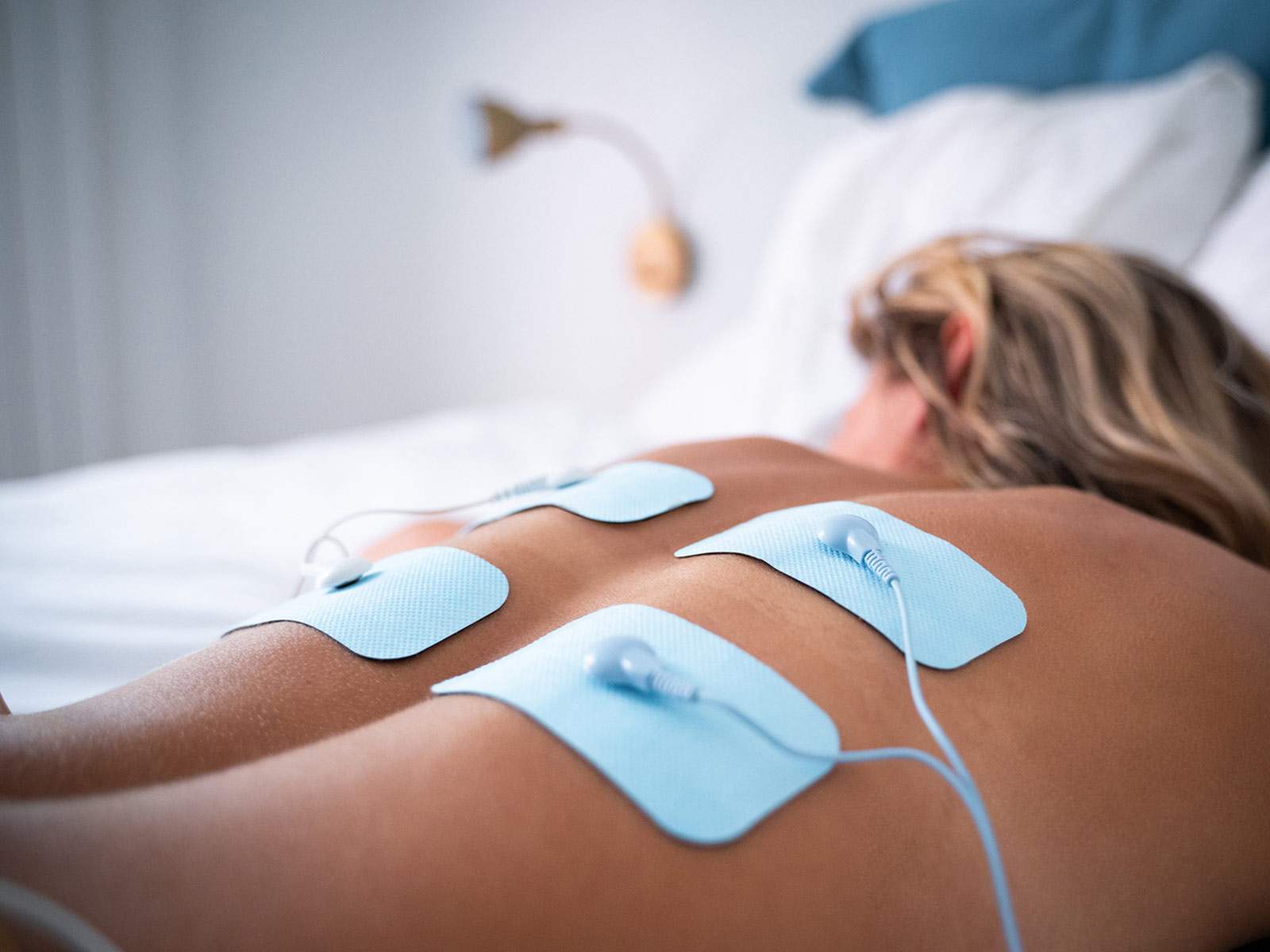
The benefits of electrostimulation for contractures
Electrostimulation for contractures offers many benefits:
- Pain relief by blocking the transmission of pain signals to the brain,
- Reduced stress and greater well-being through increased endorphin production,
- Gentle massage of the intercostal muscles to reduce muscle tension and promote recovery,
- Improved blood circulation,
- Etc.
Even though electrostimulation is recognised as safe, it is advisable to get the opinion of a healthcare professional before using it to relieve an intercostal contracture. For example, electrostimulation for a muscle tear must be used with caution to prevent any risk of worsening.
Bluetens' “Intercostal pain” electrostimulation programme
Bluetens has developed a unique electrostimulation programme that relieves the acute pain felt along a rib in the case of an intercostal contracture.
To access it, go to the “Generic treatment” section from the home page of the Bluetens app. Then choose the “Back” body area and the “Intercostal pain” programme.
Lasting two weeks in total, this programme includes 14 individual electrostimulation sessions. These sessions help relax muscle tension, reduce pain and promote recovery.
Frequently asked questions about intercostal contracture
How do I know if I have an intercostal contracture?
An intercostal contracture usually causes pain between the ribs that increases when breathing deeply, coughing, sneezing, rotating the torso or pressing on the tender area. It often appears after exertion, an awkward movement, prolonged poor posture or repeated coughing.
How long does an intercostal contracture last?
A mild contracture can improve within a few days. In most cases, the pain gradually decreases within 5 to 10 days with rest and by avoiding painful movements. A more severe contracture can remain bothersome for one to three weeks.
Should you use heat or cold on an intercostal contracture?
For a classic muscle contracture, heat is generally the most suitable, as it helps relax the muscle fibres and reduce the feeling of tension. Cold is mostly used in the first few hours after a blow, a fall or very sharp pain with suspected trauma.
Can you do sport with an intercostal contracture?
It is best to avoid sport during the painful phase, especially activities that put heavy strain on the upper body, such as weight training, swimming, racket sports, intense running or ab exercises. Return to sport should be gradual, once deep breathing and torso movements no longer cause pain.
Can an intercostal contracture hurt when breathing?
Yes. The intercostal muscles are involved in the movements of the rib cage during breathing. When they are contracted, a deep breath can cause pain between the ribs. However, if the pain is accompanied by shortness of breath, chest tightness or feeling unwell, seek medical advice quickly.
Can Bluetens help relieve an intercostal contracture?
Bluetens can be used when the intercostal pain is clearly muscular in origin. Electrostimulation can help reduce pain and promote relaxation of the intercostal muscles, alongside rest, heat and gentle exercises. Also discover the principles of electrostimulation for pain relief.
Which other areas can be affected by a muscle contracture?
Contractures can also affect the neck, shoulders, back or lower limbs. Read our guides on trapezius contracture and calf contracture.
This information is provided for information purposes only and does not replace medical advice. In the event of intense, persistent or unexplained chest pain, see a healthcare professional.
Posted in: Contracture
Related posts
-
 La contracture du mollet : symptômes, causes et traitementsUne contracture du mollet est une contraction involontaire et durable de plusieurs fibres musculaires du mollet. Elle...Read article
- Tout savoir sur la contracture musculaire du dos : symptômes, causes et traitementsUne contracture musculaire se caractérise par une contraction involontaire et durable d’un ou de plusieurs muscles....Read article
- Comment soulager une contracture à la cuisse ?La contracture musculaire est un mécanisme de défense du corps qui s’avère être très douloureux sur le coup. Il...Read article
- Tout savoir sur la contracture du trapèze : symptômes, causes et traitements naturelsDécouvrez tout ce qu’il faut savoir sur la contracture du trapèze, des symptômes aux causes les plus courantes, en...Read article
- Faut-il appliquer du chaud ou du froid en cas de contracture musculaire ?La contracture musculaire dure plus longtemps qu’une crampe et est généralement plus douloureuse. Parmi les méthodes...Read article